Community Guide

Phoenix

The fifth largest city in America, lived at a Sonoran scale.

Phoenix is the fifth largest city in the United States with 1.65 million residents, and its luxury residential market is concentrated in Arcadia, the Biltmore corridor, North Central Phoenix, and the historic neighborhoods around downtown. The median luxury sale (homes over $1 million) was $1.6 million in 2025.

1.65M
Residents
$1.6M
Median Luxury Sale
325
Days of Sunshine Annually
18 min
Arcadia to Sky Harbor

What is Phoenix, Arizona known for?

Phoenix is known for being the largest city in the Southwest, the political and economic capital of Arizona, and the home of the most concentrated mid-century modern residential architecture in the United States. The luxury real estate market is small relative to the population and concentrated in a handful of distinct historic and contemporary enclaves.

The Phoenix luxury market is defined by two corridors: the Arcadia neighborhood between 40th and 64th Streets along Camelback Mountain, and the Biltmore corridor anchored by the Arizona Biltmore Hotel (a 1929 Frank Lloyd Wright-influenced resort). Both corridors trade between $1 million and $8 million for single-family homes.

Downtown Phoenix and the Roosevelt Row arts district have produced a smaller but growing market for high-rise residences, including The Stewart, Optima Camelview, and the Portland on the Park. These run from the high $500,000s for one-bedroom units to $5 million for full-floor penthouses.

A Closer Look

Inside the neighborhoods.

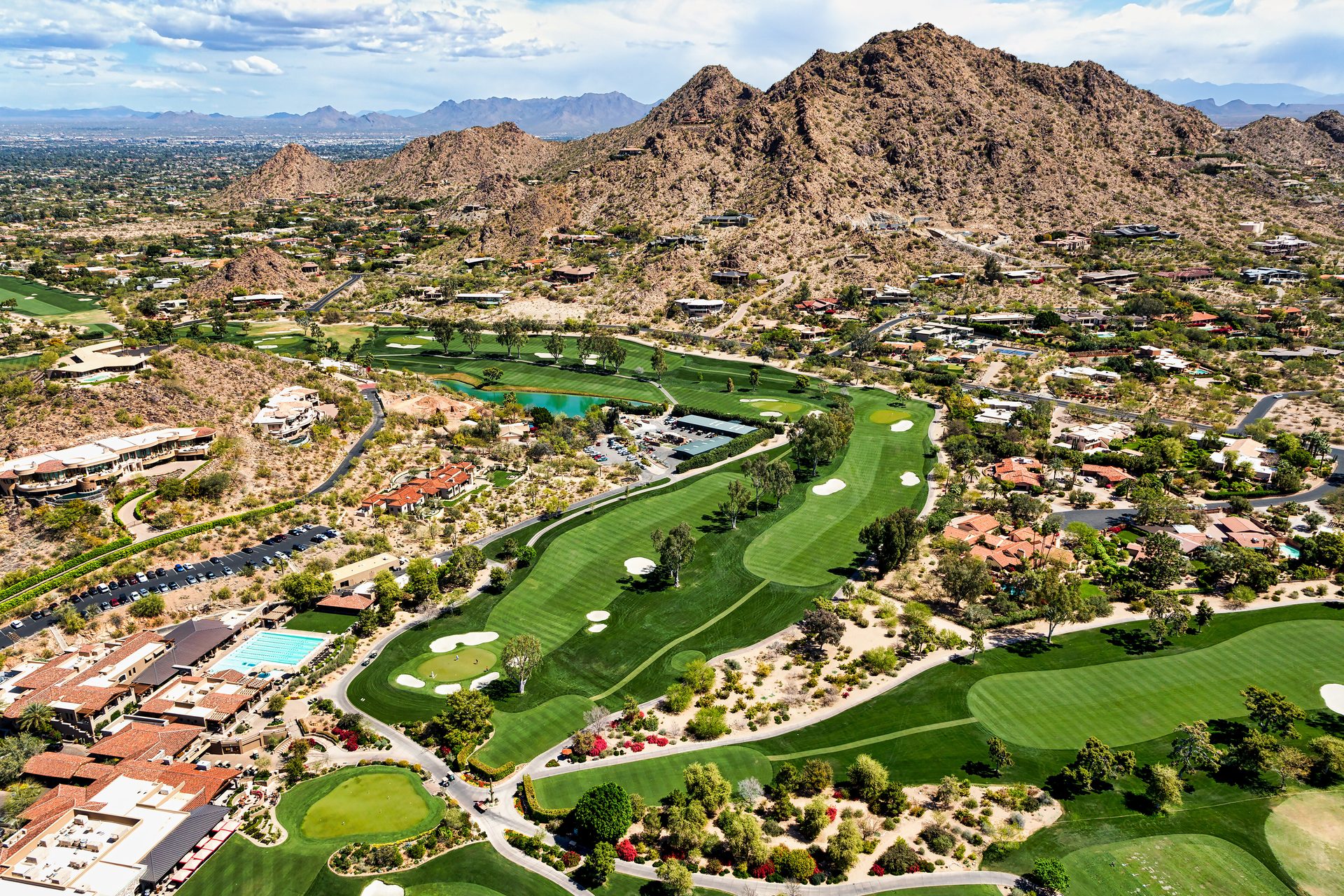
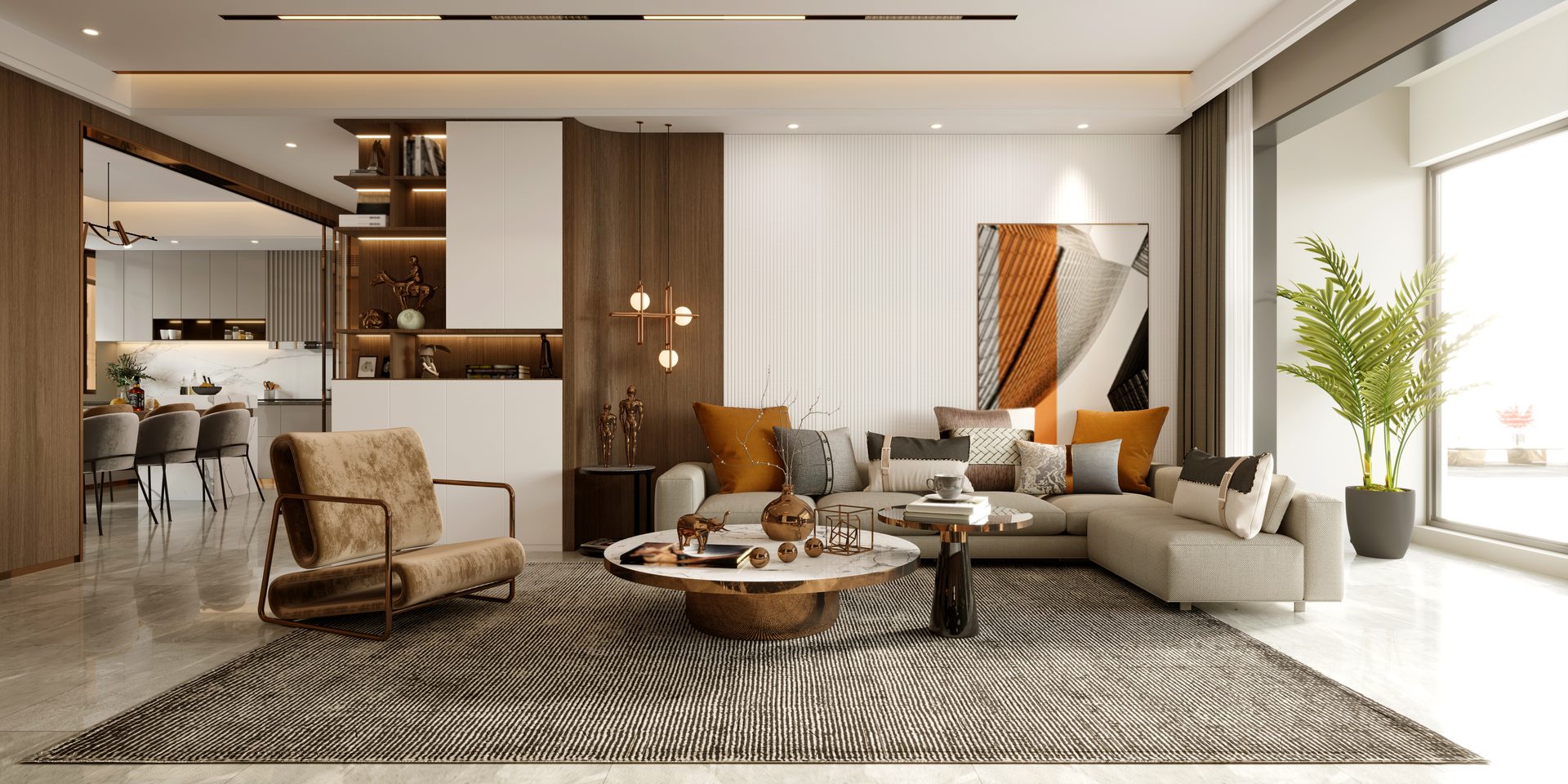
The Haus Theory team has personally toured every neighborhood detailed below. Where photography is shown, it represents the architectural character of the area rather than any specific listing.

Neighborhoods

What are the most desirable neighborhoods in Phoenix?

Arcadia

The most desirable neighborhood in Phoenix. 1950s ranches on flood-irrigated half-acre lots, with citrus trees, mature landscaping, and direct views of Camelback. Tear-down and rebuild activity is high, with new construction reaching $5 to $8 million.

Arcadia Lite

The smaller-lot, more attainable version of Arcadia, generally between 32nd and 40th Streets. Median sale roughly $1.4 million.

Biltmore Estates and the Biltmore Corridor

Patio homes, condos, and freestanding estates around the Arizona Biltmore Hotel. Mature olive and date palm landscaping. Median single-family sale $2.2 million.

North Central Phoenix

Murphy Bridle Path, Pasadena, and the neighborhoods along Central Avenue from Bethany Home to Glendale. Original 1940s and 1950s homes on large lots. Median sale $1.1 million.

Encanto and Historic Downtown

The early-20th-century historic districts of Phoenix: Willo, Encanto-Palmcroft, Coronado, and Roosevelt. Bungalows, Tudors, and the densest concentration of Phoenix's pre-war architecture. Median sale $850,000.

Camelback East and Tatum Highlands

Hillside contemporary architecture on the south slope of Camelback Mountain, just inside the Phoenix city limits. Average sale $3.5 million.

What is the Phoenix luxury real estate market like in 2026?

Phoenix recorded approximately 2,800 luxury home sales (homes over $1 million) in 2025, with a median luxury sale of $1.6 million. The top reported sale was $18.5 million for an Arcadia compound on a 1.8 acre flood-irrigated lot.

Arcadia is the tightest sub-market: median days on market is 24 days in 2025, with most listings receiving multiple offers in the first two weeks. The Biltmore corridor, by contrast, has more inventory and averages 65 days on market.

Downtown high-rise inventory expanded by 18 percent in 2025 with deliveries at The Stewart, Astra, and Portland on the Park. This is the only Phoenix segment currently in a buyer's market.

What is it like to live in Phoenix?

Living in Phoenix is defined by proximity. Arcadia and Biltmore residents are 12 to 18 minutes from Sky Harbor International Airport and 8 to 10 minutes from downtown. The city offers professional teams in all four major North American sports (Suns, Diamondbacks, Cardinals, Coyotes).

Phoenix Union High School District and Madison Elementary School District serve much of the central luxury market. Top-rated public options include Madison Heights, Madison Meadows, and Arcadia High School. Private options include Brophy College Preparatory and Xavier College Preparatory.

Dining and culture cluster along 40th and Camelback in Arcadia (Postino, Chelsea's Kitchen, The Henry), along Central Avenue (Pa'la, FnB sister concepts), and in Roosevelt Row (Pizzeria Bianco, Welcome Diner, Restaurant Progress).

Outdoor life is built around Camelback Mountain's Echo Canyon trailhead, the Phoenix Mountain Preserve, and the Arizona Canal path. The canal serves as a 12-mile pedestrian and cycling corridor through Arcadia, Biltmore, and into Scottsdale.

Lifestyle

A daily rhythm.

From dining to outdoor recreation to commute patterns, the texture of daily life shapes which markets are right for which clients. We help our clients calibrate their search to the lifestyle they actually want.
Phoenix FAQ

Frequently Asked Questions

Arcadia is in Phoenix. The neighborhood sits between 40th and 64th Streets and from Indian School Road north to McDonald, with most of the eastern boundary forming the city line with Scottsdale. Arcadia's zip code is 85018, a Phoenix zip code.
The Phoenix citywide median single-family sale was $475,000 in 2025. Within the luxury market (homes over $1 million), the median was $1.6 million, with Arcadia at $1.85 million and the Biltmore corridor at $2.2 million.
Flood irrigation is a Salt River Project water-delivery system that channels canal water across the lawns of qualifying Arcadia properties every 10 to 14 days. Lots with flood irrigation rights trade at a premium of $100,000 to $300,000 over non-irrigated lots of the same size.
Downtown Phoenix high-rise condominiums have produced a 4.2 percent compounded annual price appreciation rate from 2015 to 2025, lower than the Arcadia rate of 7.8 percent over the same period. The downtown segment is best for buyers prioritizing walkability and short-term rental potential, not maximum appreciation.
Phoenix is older, larger (1.65 million residents vs Scottsdale's 250,000), and includes the regional airport, downtown business district, and central government. Scottsdale is wealthier on a per-capita basis, contains the bulk of the metro's resort inventory, and has a more uniformly newer building stock north of Shea Boulevard.
Begin a Conversation

Considering a move to Phoenix?

Whether you are buying, selling, or simply gathering market intelligence on Phoenix, we welcome the conversation. There is no obligation and no template response.

Contact Haus Theory Collective